


You’re holding Chaos. Here’s exactly what to do next
If You Got The Dry Starter Packet
Your dry starter is Chaos, dehydrated and dormant, but very much alive. Before you can bake with it, you need to rehydrate it. Your packet includes an insert with instructions, or watch the video walkthrough of the full rehydration process.
Once it’s active and bubbly, come back here and follow the steps below.
If You Got The Active Starter (The Jar)
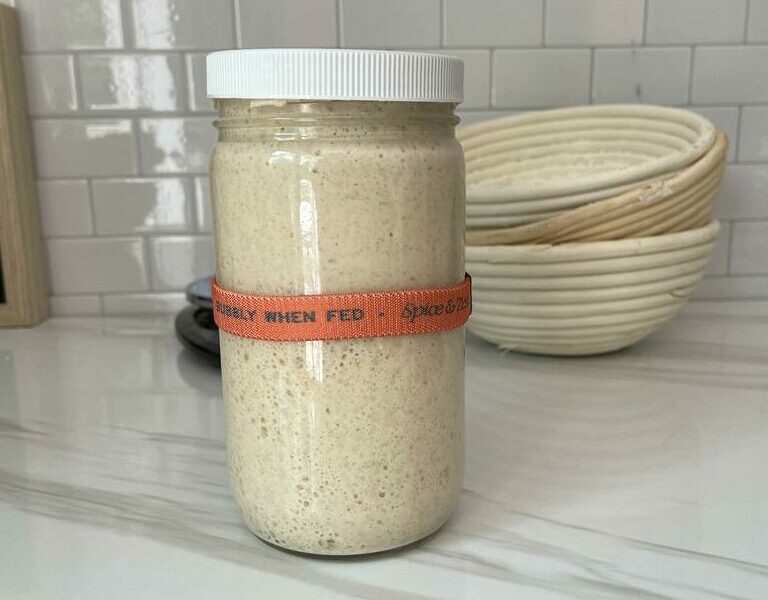
You’re holding a jar of Chaos, a decade-old sourdough starter that’s been fed, loved, and baked with more times than I can count. By the time it reaches you, it’s been fed and has naturally deflated during transit. That’s completely normal.
The first thing you should do is feed it. Don’t wait. Feeding it right away gives it a boost and ensures it stays strong before you store it.
Your First Feed — Step By Step
You’ll need:
- A kitchen scale
- Unbleached bread flour (or all-purpose) and a little whole wheat — an 80/20 blend works great
- Room temperature water
Here’s what to do:
- Open the jar. If you see liquid on top, that’s called hooch — it’s just a byproduct of fermentation. Pour it off.
- Leave only 1–2 tablespoons of starter in the jar. Discard the rest (or use it in pancakes, crackers, anything that doesn’t need to rise).
- Add 40g flour and 40g water. Mix until no dry flour remains.
- Cover loosely — not airtight. A jar lid set on top without screwing it down, a cloth, or a coffee filter secured with a rubber band all work.
- Leave it at room temperature for 4–8 hours until it’s bubbly and has risen noticeably.
- Once active, you can store it in the fridge until you’re ready to bake.
That’s it. You’re done for now.
Storing Your Starter
Once Chaos is active and fed, it lives in the fridge. Take it out once a week, feed it, let it activate for a few hours, then put it back. When you’re ready to bake, feed it 6–8 hours before you plan to use it and wait until it’s bubbly and at its peak.
What’s Normal (And What’s Not)
Normal:
- Liquid on top (hooch) — pour it off and feed
- Strong or sour smell in the first few days — keep feeding, it mellows out
- Slow activity after transit — give it 1–2 feedings to bounce back
- Bubbles but not a dramatic rise yet — it’s waking up, keep going
Not normal:
- Pink, orange, or fuzzy mold — if you see actual mold (not just discoloration from hooch), start fresh
- No activity at all after 3–4 feedings — reach out, I’ll help you troubleshoot
Ready To Actually Bake?
Feeding a starter is one thing. Knowing how to use it confidently — timing your bake, understanding fermentation, getting a good crust — that’s where most people get stuck.
My online sourdough course walks you through the entire process, start to finish, at your own pace. No guesswork, no overwhelming techniques. Just real, practical sourdough that works in a real home kitchen.
Or if you want to go deeper on starter care first:
 Easy Homemade Gravlax (Cured Salmon)
Leave a Reply
You must be logged in to post a comment.